Overview
Being of Pakistani descent myself, Khao Suey is a recipe that’s sold in street foods located throughout Karachi and especially in areas where there is a predominance of Memon people. Those versions are typically made with beef and is the authentic recipe that represents the transference of recipes from Burma. You will find a beef version coming very soon to our site as well!
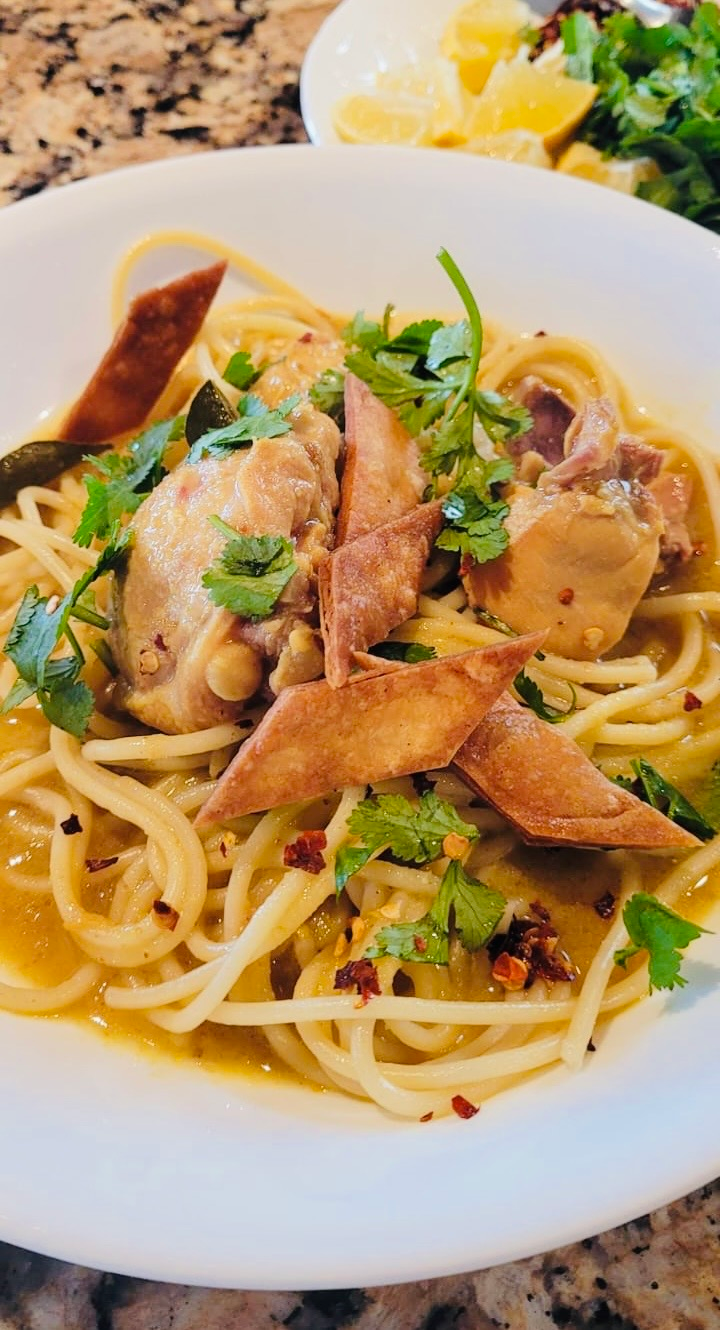
This recipe, however, plays on the original but substitutes the beef for those slightly cutting down on red meat and replaces it with chicken on the bone to preserve a tender and juicy bite which is offset by notes of lime, spices, and a hint of coconut curry. Served on a bed of noodles and garnished with cilantro, lime, chili flakes, and fried crispy strips the flavors are bright and refreshing and would be great to serve in the summer time. Surprisingly, the ingredient list is also not too complex either while still delivering a flavor punch!
A perfect dish when you feel like having something else, outside of the typical biryani and nihari (nothing wrong with those of course!). This balanced dish represents the cuisine from the far east as it made its way down from the spice trade to South Asia – a fusion of cultures.
Ingredients
2-3 lbs. Bone in Chicken (cut into medium size pieces)
2 Onions (chopped into small pieces – red onions if possible)
2 Cloves Garlic
2 tbsp. Ginger & Garlic Paste
1 tbsp. Salt (more if needed per taste)
2 tbsp. Besan Flour (also known as Gram Flour)
1 Can Coconut Milk (400mL)
1/2 tsp. Turmeric Powder
1/2 tsp. Red Chili Powder
1/2 tsp. Coriander Powder
1/2 tsp. Cumin Powder
10 Curry Leaves
Spaghetti Noodles (cooked al dente)
Canola Oil
Garnish:
Cilantro
Fried Samosa Strips (can also use tortilla chips or any kind of store bought wonton wrapper and fry it)
Lemon or Lime
Red Chili Flakes
Directions
- Sauté onions until golden brown in a pot with enough oil to cover on high heat. Around 1/4 cup oil should be fine (It might seem like a lot but this will also cook down the chicken later as well). Stir occasionally to bring to even out the color.
- About 1 minute before the onions are done caramelizing, add in the ginger garlic paste and curry leaves. Stir quickly while it is cooking so it does not burn.
- Add in the washed chicken and stir into the mixture.
- Now you can add in the rest of the spices consisting of turmeric, coriander, cumin, red chili powder, and salt. Stir in the mixture and evenly coat all of the chicken.
- Make a mixture of besan/gram flour by adding the 2 tbsp. of gram flour to 4 tbsp. water and make a paste separately. Add the paste into the pot once combined and lump free.
- Cook down the mixture until the chicken is fully cooked through and make sure to stir regularly so the food does not burn or get stuck to the pot.
- Add in coconut milk and same amount of water.
- Simmer the dish by reducing the temperature to about medium/medium-low and cook until the chicken is fork tender and the sauce is thickened to your liking. A thicker sauce will have a stronger flavor and coats the noodles with bolder flavors.
- Garnish with cilantro, fried samosa wrapper strips, squeeze of lime, and a small dash of chili flakes.
Tips
- We often times use cut chicken leg quarters to get dark meat all around which is more forgiving when overcooked. Feel free to use boneless breast if you want an even easier eating experience. The bone in chicken also imparts better flavor due to the bones.
- We used spaghetti noodles because they are easily available for most people but you can also use flat noodles or rice noodles if you prefer those textures. A winter variation might use buckwheat noodles.
- Adjust the garnish to personal taste. Some folks like more lemon/lime and others prefer more crunch so they will opt to add in more of the fried strips. Either way, make it fun!